
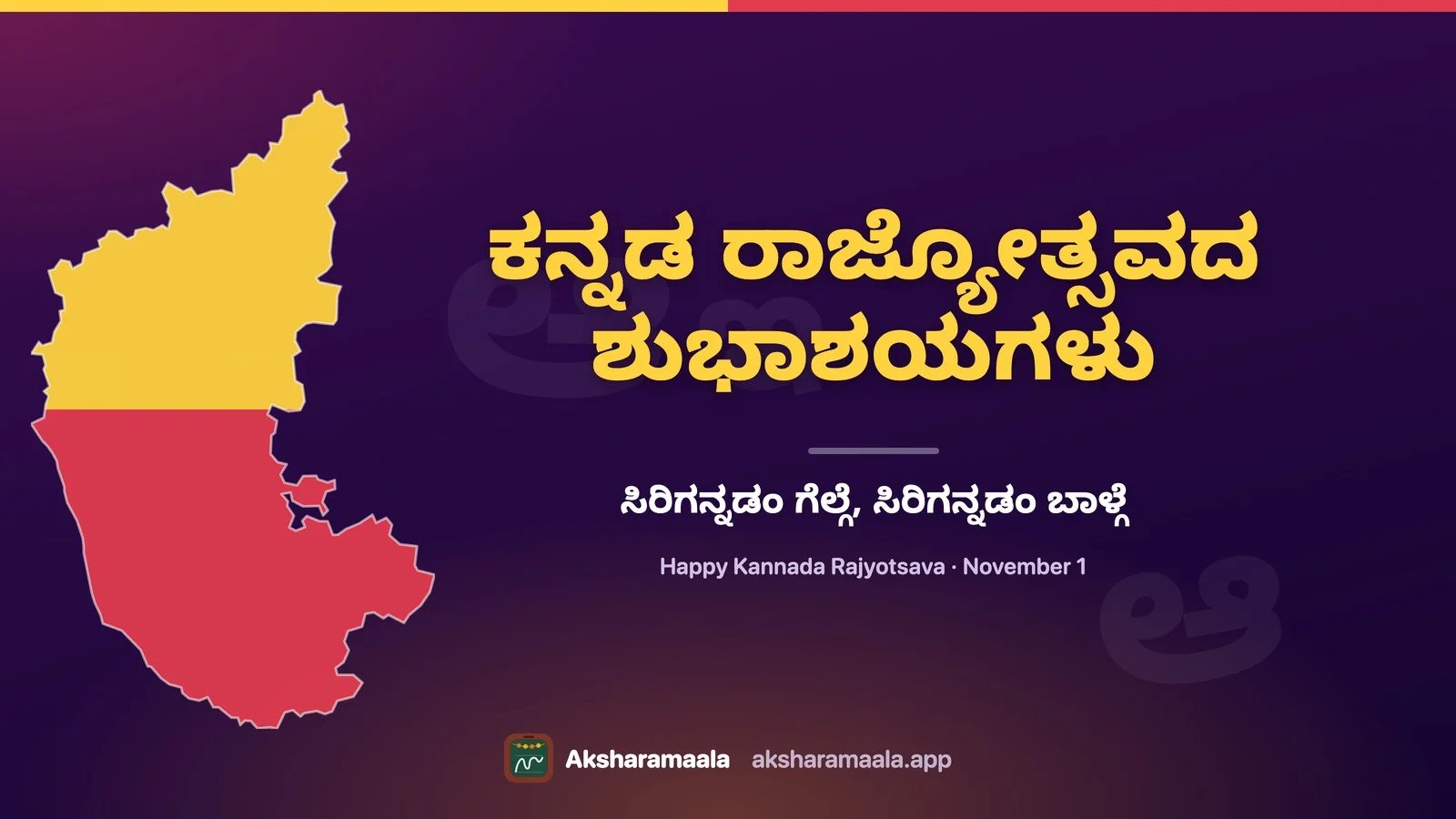
Every year on November 1, Karnataka turns yellow and red. Flags go up on balconies and auto-rickshaws, schools and neighborhoods hold cultural programs, and phones fill with the same warm message:
ಕನ್ನಡ ರಾಜ್ಯೋತ್ಸವದ ಶುಭಾಶಯಗಳು — Kannaḍa Rājyōtsavada shubhāshayagaḷu — Happy Kannada Rajyotsava.
Rajyotsava celebrates something rare: a state brought together by a language — and a language that still brings people together, in Mysuru and Mangaluru as much as in New Jersey, Singapore and Sydney.
Why November 1
After decades of the Karnataka Ekikarana (unification) movement, the Kannada-speaking regions were united into one state on November 1, 1956 — then called Mysore State, and renamed Karnataka in 1973. Not a battle or a ruler, but the idea that a shared language can make a shared home.
That language runs deep. The Halmidi inscription (around the fifth century) is often cited as one of the earliest in Kannada; the ninth-century Kavirājamārga and poets like Pampa shaped its classical tradition; Kuvempu carried it into the modern era; and in 2008 Kannada was recognized as a classical language of India.
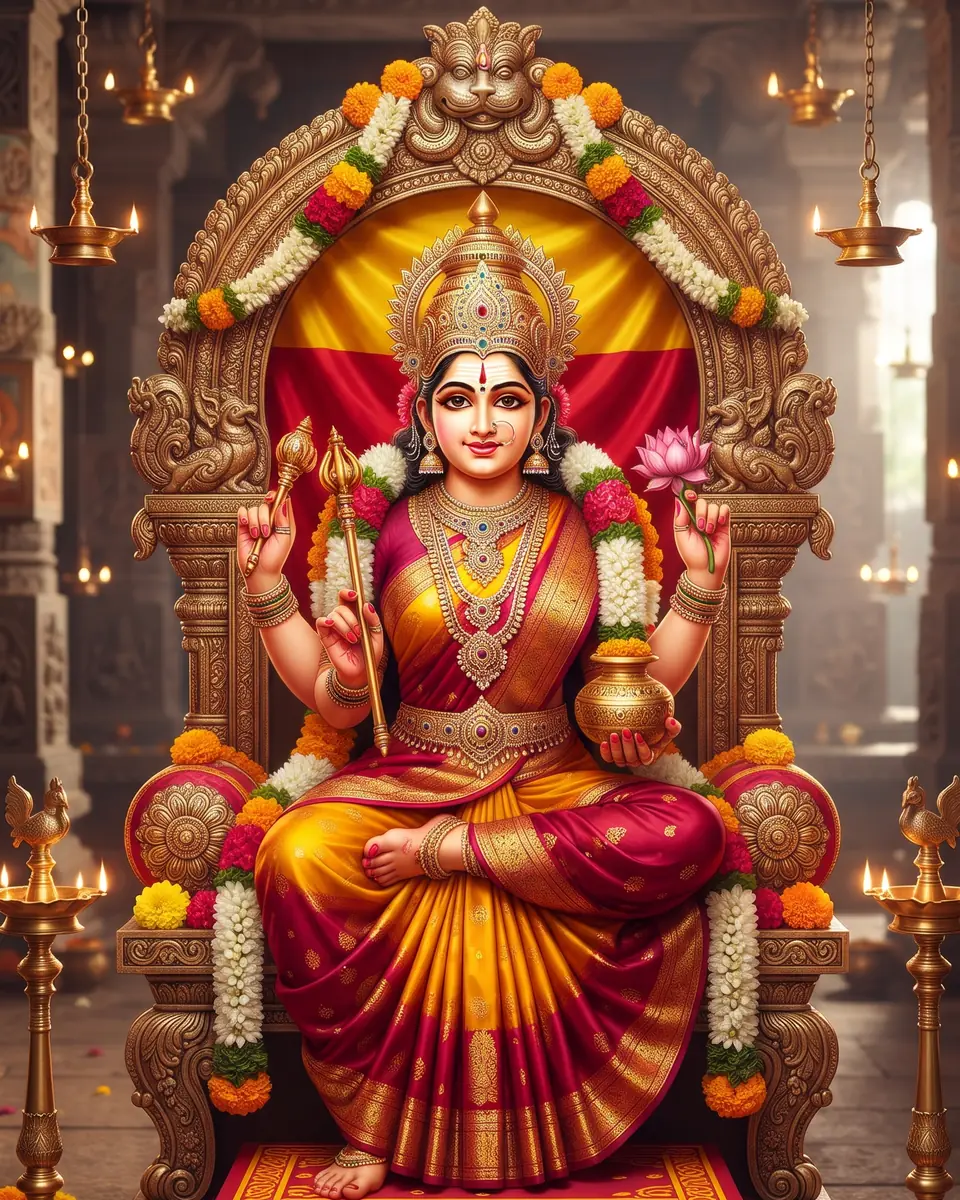
On Rajyotsava, Karnataka honours Taayi Bhuvaneshwari, revered as Kannadaambe or Karnataka Maate, the Mother of Karnataka, and the cultural and spiritual guardian of the Kannada language, land and people.
Words that carry the spirit
Some lines have become part of how Kannadigas talk about their language.
ಸಿರಿಗನ್ನಡಂ ಗೆಲ್ಗೆ, ಸಿರಿಗನ್ನಡಂ ಬಾಳ್ಗೆ
Sirigannaḍaṁ gelge, sirigannaḍaṁ bāḷge — "May glorious Kannada triumph; may glorious Kannada flourish."
— B. M. Srikantaiah
ಎಲ್ಲಾದರೂ ಇರು, ಎಂತಾದರೂ ಇರು, ಎಂದೆಂದಿಗೂ ನೀ ಕನ್ನಡವಾಗಿರು
Ellādarū iru, entādarū iru, endendigū nī kannaḍavāgiru — "Wherever you are, however you are, always remain Kannada."
— Kuvempu
Kuvempu doesn't say live in Karnataka or speak only Kannada. He says: wherever life takes you, keep the language with you.
Celebrating Kannada today
That looks different for different people. At home, grandparents speak it effortlessly and children understand more than they say. Abroad, a child answers in English and a parent speaks Kannada fluently but never learned to read it — the spoken language survives a generation or two; the script often doesn't. And for the many who have made Karnataka their new home, Kannada is the language of neighbors and colleagues.
In every case, the language lives on through connection — with your family, your roots, and the people around you.
Meaningful ways to celebrate
You don't need a stage or a program to mark Rajyotsava. A few small things can mean a lot:
- Write your greeting in Kannada script. Instead of forwarding a message, try writing ಕನ್ನಡ ರಾಜ್ಯೋತ್ಸವದ ಶುಭಾಶಯಗಳು yourself — by hand, letter by letter.
- Learn the alphabet with your child. Start with ಅ and see how far you get. Many parents discover they can speak Kannada beautifully but never learned to read it — learning together is a gift in both directions.
- Ask a grandparent for a story, a song or a proverb — and write it down.
- Greet the people around you in Kannada. A few phrases go a long way:
| Kannada | Say it | Meaning |
|---|---|---|
| ನಮಸ್ಕಾರ | namaskāra | Hello / greetings |
| ಹೇಗಿದ್ದೀರಿ? | hēgiddīri? | How are you? |
| ಊಟ ಆಯ್ತಾ? | ūṭa āytā? | Have you eaten? (a very Kannada way of saying "I care") |
| ಕನ್ನಡ ಸ್ವಲ್ಪ ಸ್ವಲ್ಪ ಬರುತ್ತೆ | kannaḍa svalpa svalpa baruttē | I know a little Kannada (literally, "a little Kannada comes to me") |
- Make it a habit, not a day. November is Kannada month — a few minutes a day is enough to begin.
Start with ಅ
Aksharamaala helps families and adult learners read, write and speak Kannada — from ಅ ಆ ಇ ಈ to everyday words and sentences, a few minutes a day. Whether you're celebrating Kannada with your children, reconnecting with your roots, or getting to know the people around you, Rajyotsava is a good day to begin, and so is any other.
ಸಿರಿಗನ್ನಡಂ ಗೆಲ್ಗೆ!
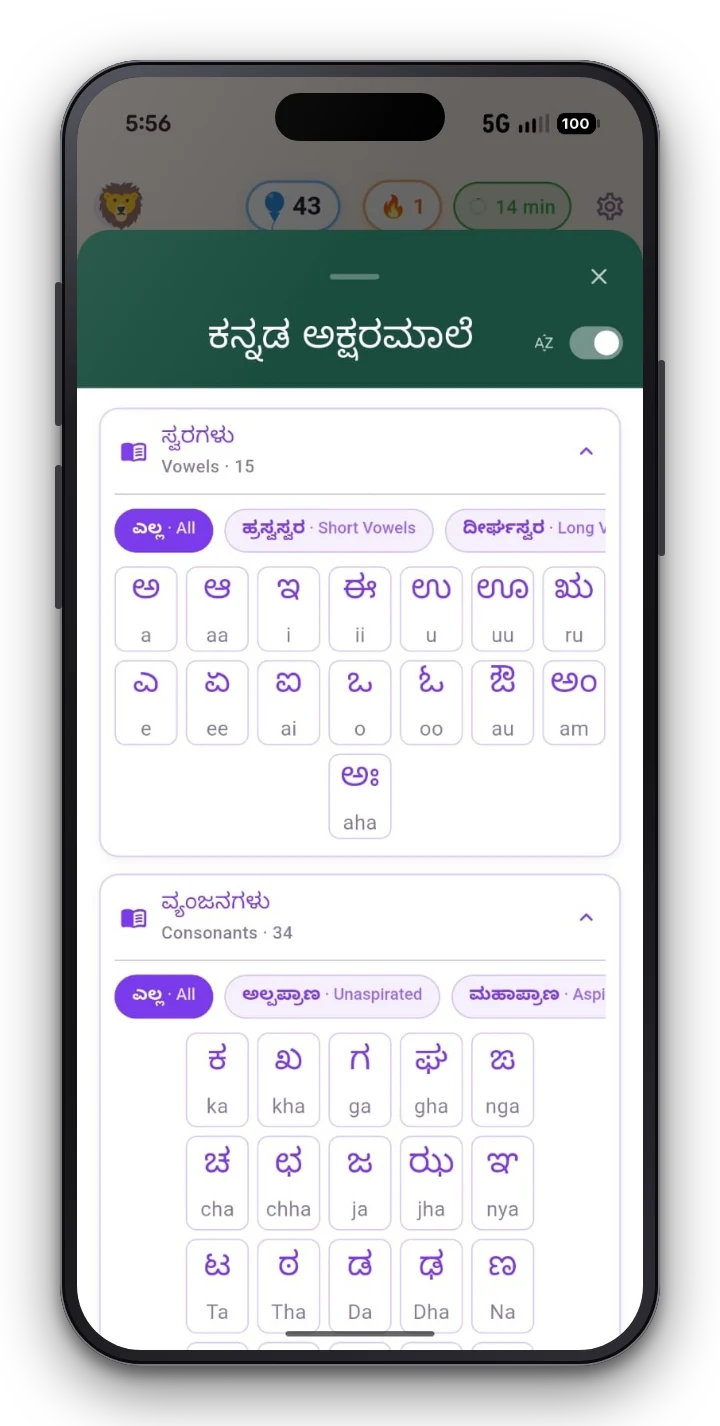
Every letter of ಕನ್ನಡ
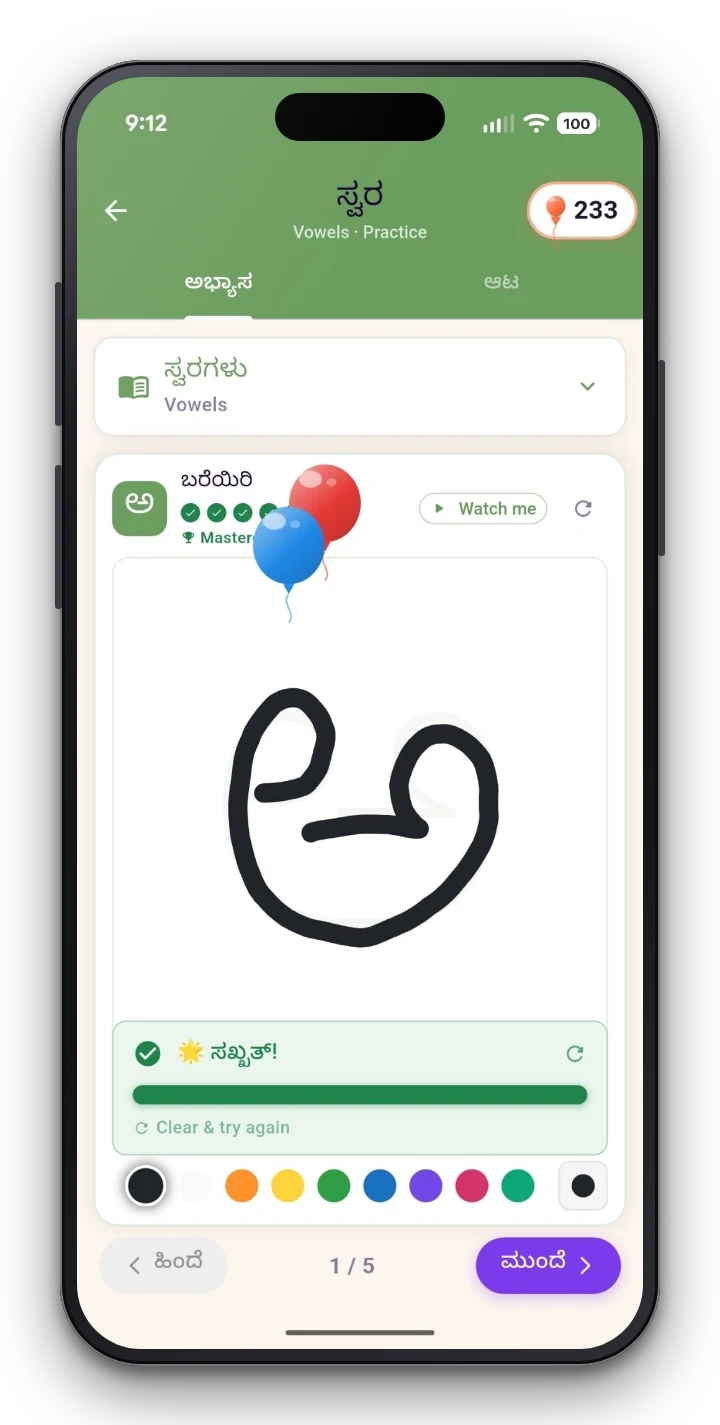
Guided strokes with instant feedback
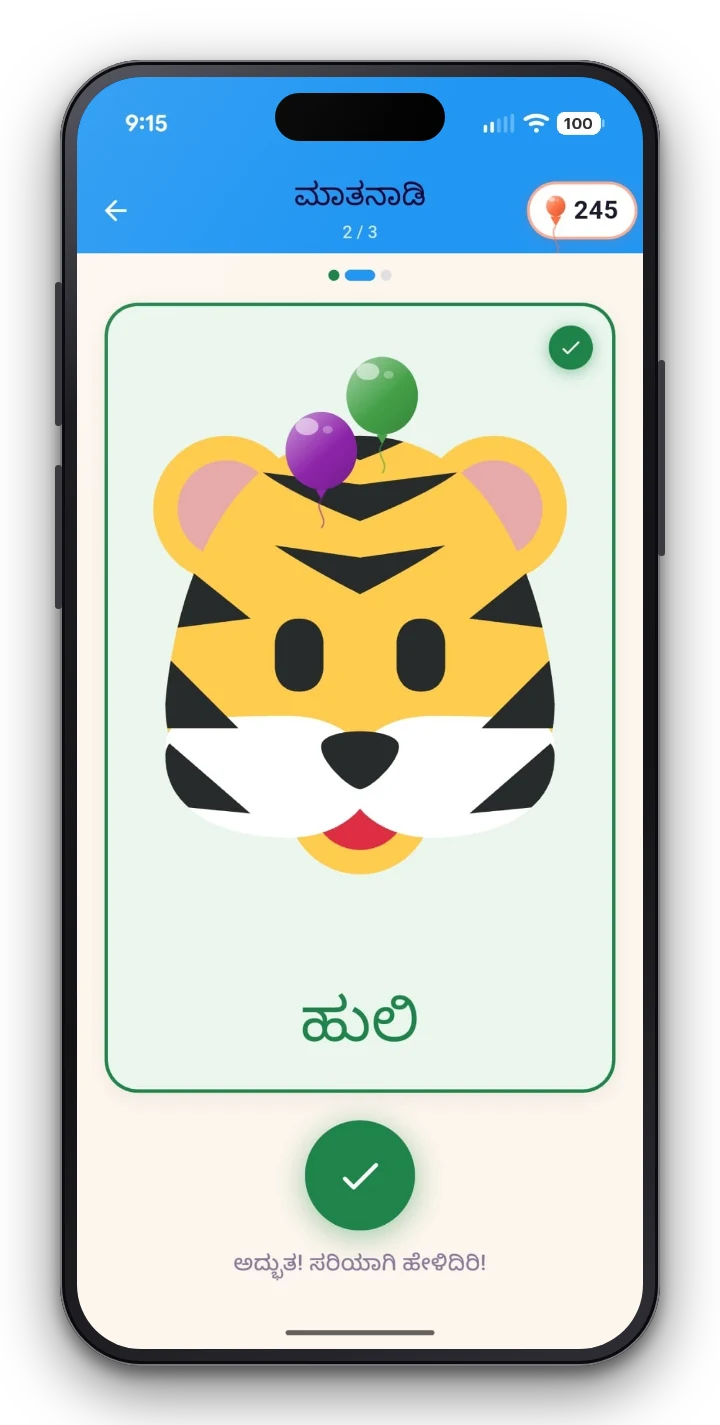
Say it out loud

Scan to download on iPhone or Android
and start learning ಕನ್ನಡ today.